About the brand
Sunvim Group is a major home-textile manufacturer founded in 1987 and listed on the Shenzhen Stock Exchange. Its core ranges include towels, bedding and decorative fabrics, with products sold in China and international markets including Japan, Southeast Asia, Europe, the United States, Australia and the Middle East.
That manufacturing and market reach makes Sunvim a particularly relevant towel application. A replacement cue for this category has to work on a real, frequently handled textile: it must remain easy to locate beside the towel pile, and its explanation must survive the transition from packaged product to everyday use.
The application
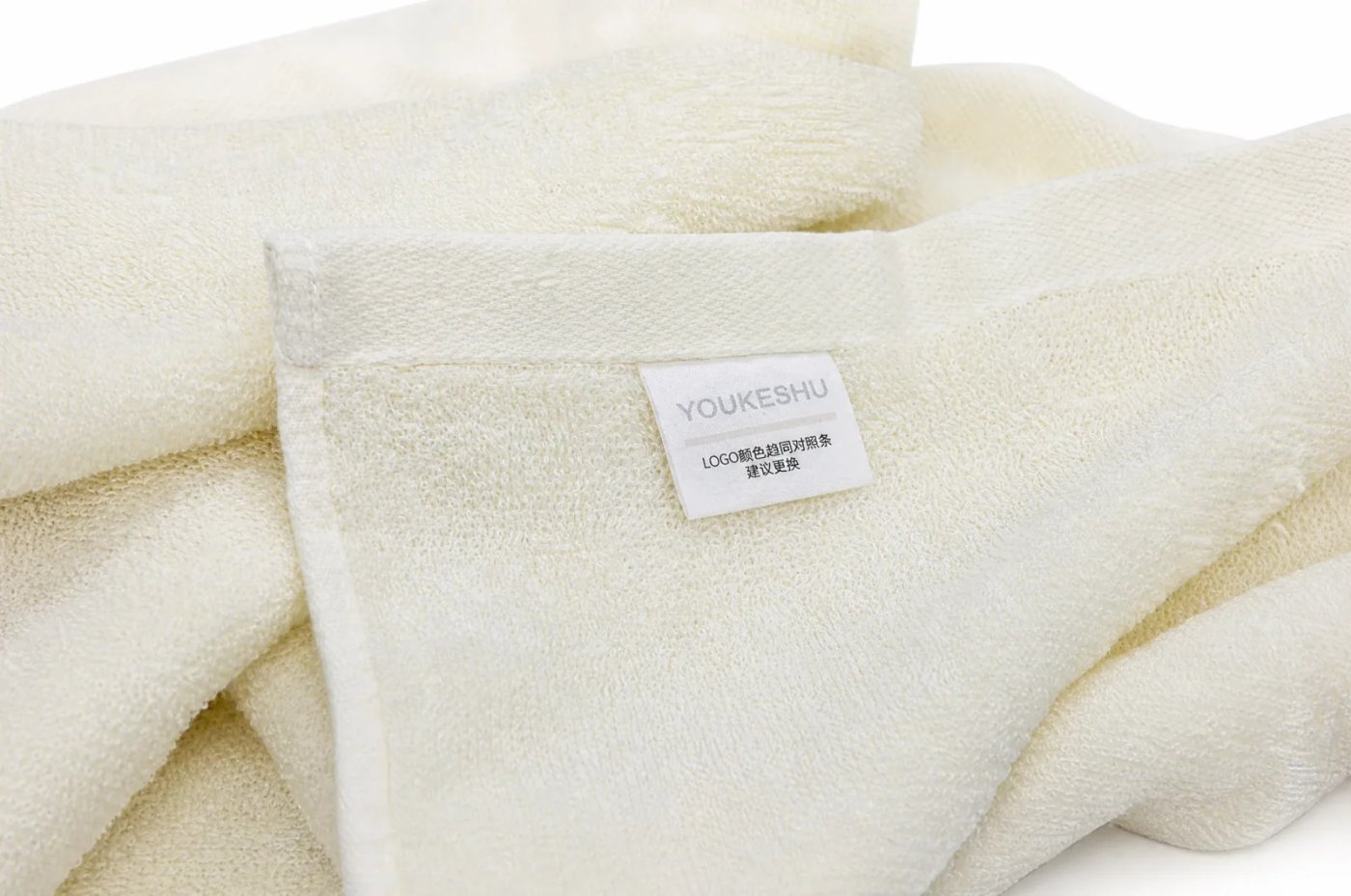
On this Sunvim towel, the replacement comparison stays on a white sewn edge label carrying the J.Dear and Sunvim names. The towel's sewn label asks the user to compare the pattern with the indicator strip. When the colors look similar, the label recommends considering replacement.
A separate black-and-white Leafclock guide introduces the feature at unpacking. The two pieces have deliberately different jobs:
- The sewn label stays with the towel. It keeps the color comparison and replacement instruction within reach whenever the towel is used, folded or washed.
- The removable guide does the initial teaching. Its larger format explains the reading rule before being torn off, without forcing the permanent label to carry a long explanation.
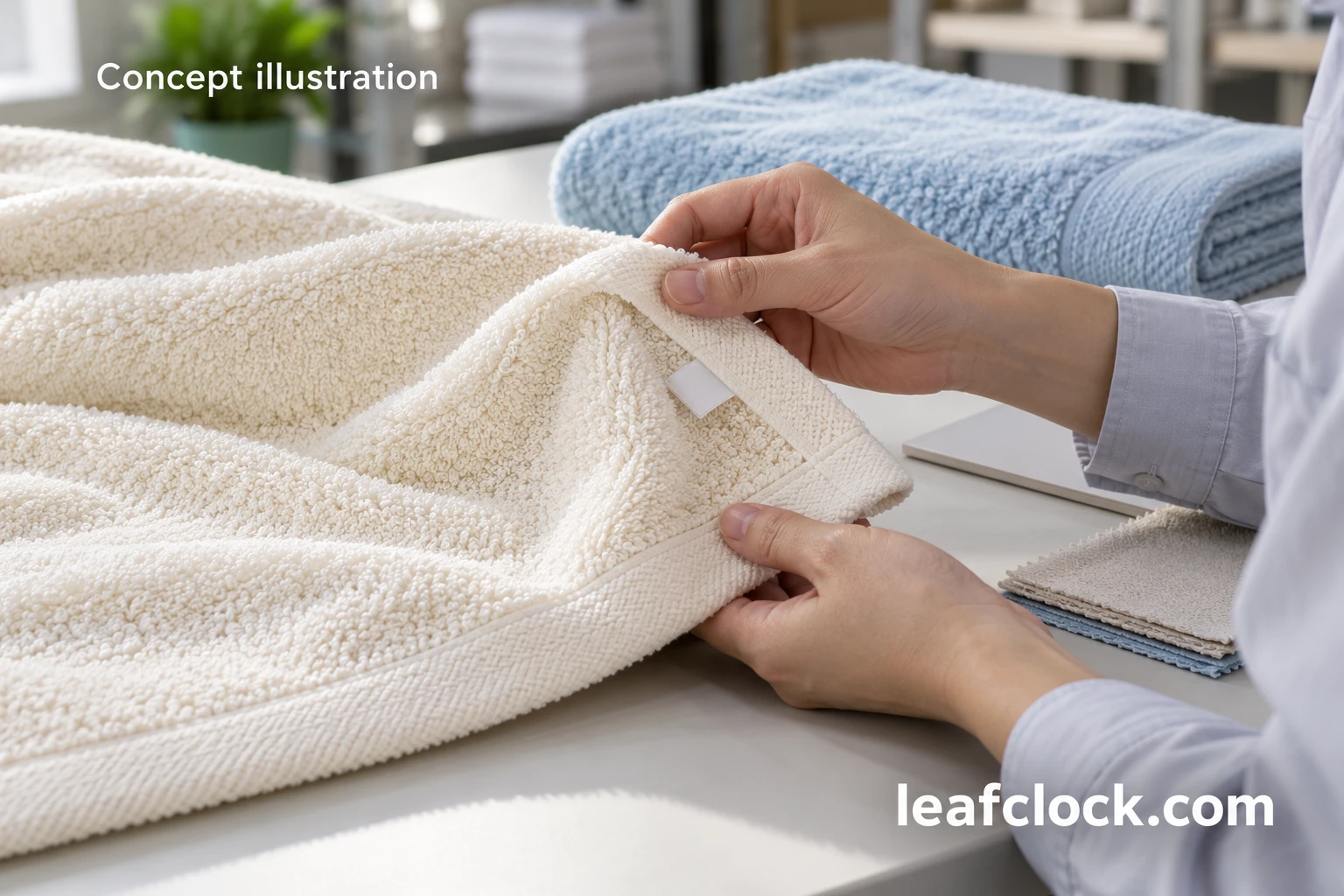
- The smooth binding creates a clear place to look. Against the looped towel surface, the edge label provides a distinct location that can also be shown in a product-page close-up.
After the guide is removed, the towel still carries the essential comparison. The result is a simple handoff from first-use education to ongoing product communication, with no app, electronics or separate record-keeping required.
What this signals
This was an implemented towel program that moved into market use. It shows how a visible lifecycle label can become part of a high-frequency home textile while respecting the product's everyday use and existing brand presentation.
For towel and home-textile brands, the broader lesson is that the permanent cue and its first-use explanation do not have to be the same component. Leafclock can configure the indicator for the towel, its construction and its actual wash-and-dry routine, while the packaging or removable guide teaches the approved reading rule. The two components can then be evaluated together on the finished towel rather than treated as a generic label template.
Next step
Share your towel binding, sewn-label artwork and removable-guide format to review the comparison, replacement wording and first-use explanation under the intended laundry conditions.