About the brand
Embry Form is the flagship lingerie brand of Embry Holdings, a Hong Kong-founded intimate-apparel group established in 1975 and listed on the Hong Kong Stock Exchange. The group develops, manufactures and sells lingerie across a portfolio that includes EMBRY FORM, FANDECIE, COMFIT, LIZA CHENG, E-BRA, IVU, IADORE and EMBRYKIDS.
Its retail business serves mainland China, Hong Kong and Macau. That combination of product development, manufacturing and retail experience makes Embry Form a meaningful example of how lifecycle communication can be built into mainstream intimate apparel rather than presented as a niche technical feature.
The application
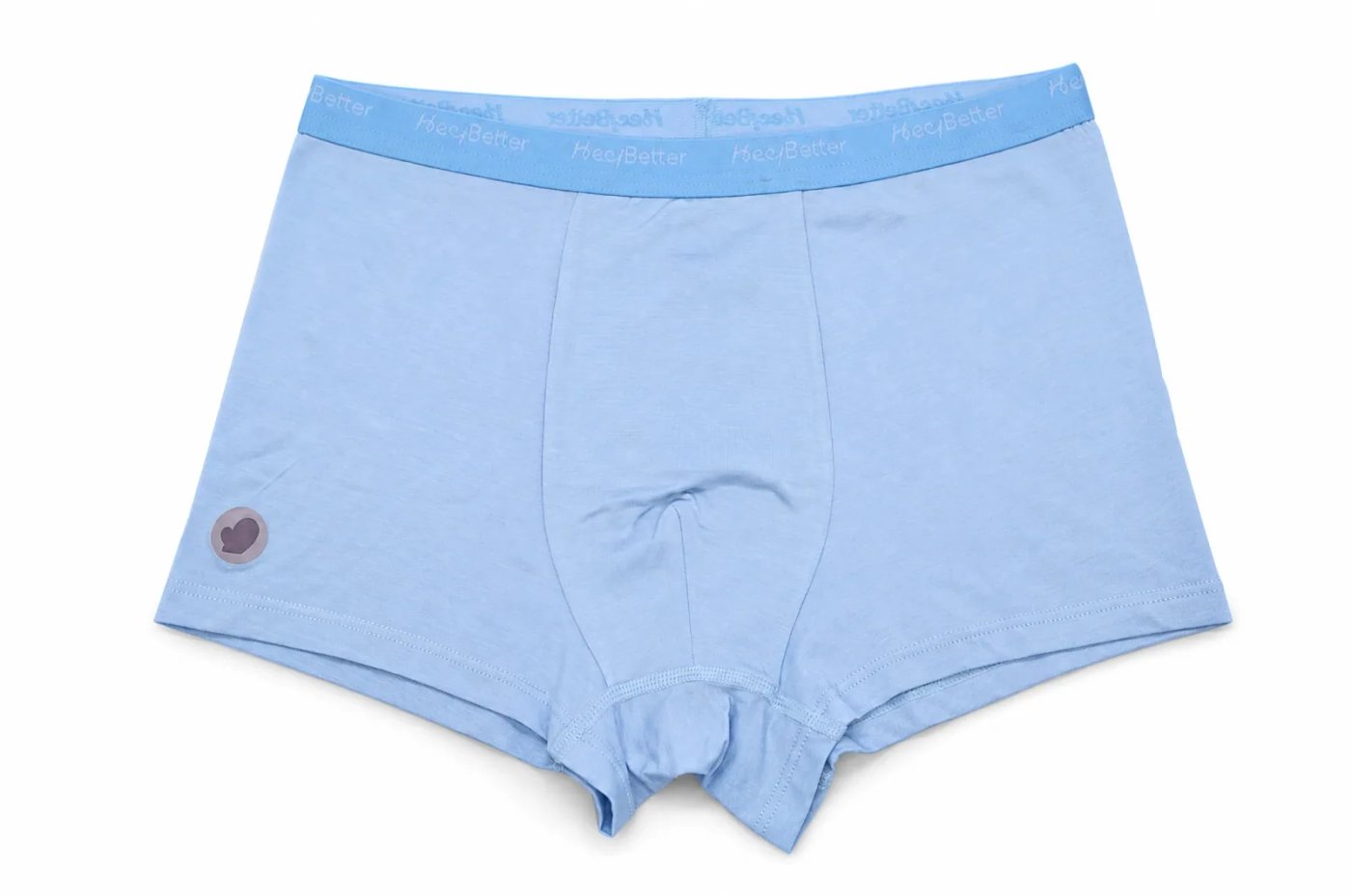
Embry Form and Leafclock brought a discreet replacement cue into bras and briefs that reached the market. The product task was clear: make replacement awareness visible within the refined presentation expected from intimate apparel.
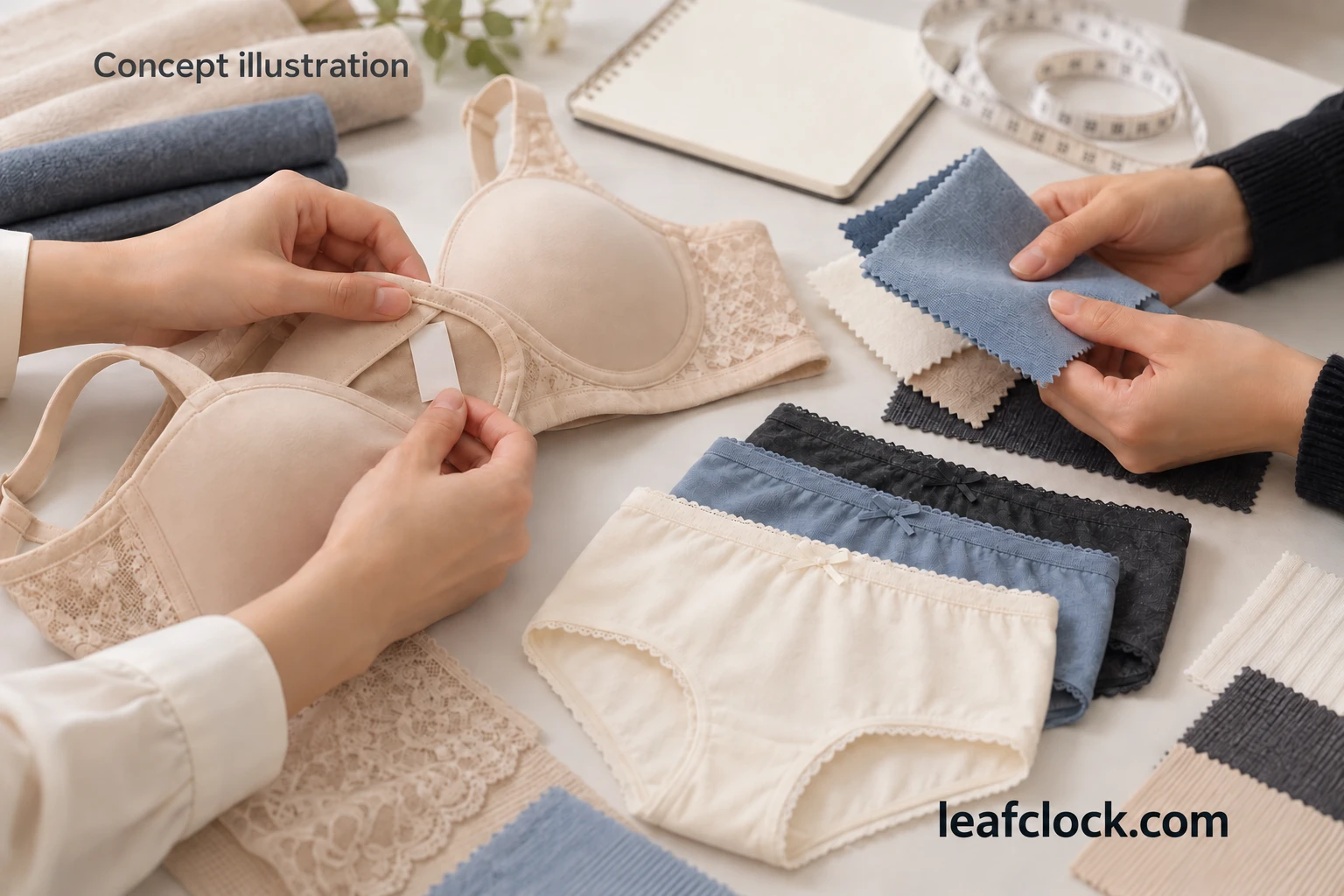
For a similar range, the evaluation begins with the assembled garment, not an isolated label artwork:
- Compare flat and tensioned areas. A brief's waistband and a bra's curved or elastic zones present different placement conditions; the right location must be reviewed on the actual construction.
- Match the carrier to the construction. Compare a flat transfer area with a sewn carrier where seams or elastic put the garment under tension. Check feel and readability on the assembled sample.
- Teach the comparison and the action together. Keep the changing area and its reference visible together, and decide what the approved packaging or care communication should explain before the package is discarded.
The ordinary wash and care instructions stay in place. The lifecycle cue adds a distinct replacement action rather than changing the meaning of routine garment care.
What this signals
For an established lingerie group, the value of this application is not an extra graphic for its own sake. The lifecycle label is a functional communication layer that can live within an existing product system.
The market application shows that replacement awareness can belong in close-to-body products without asking the customer to use an app or interpret a technical dashboard. For product teams, the useful next decision is specific: compare carrier options on curved and elastic areas, then verify the message on the finished garment. Leafclock adapts the cue to each approved garment, fabric and care routine rather than assuming one placement fits a whole collection.
Next step
Share a bra or brief with its seams, elastic, care-label layout and intended care routine to compare transfer and sewn-carrier options on the assembled sample.