About the brand
E-Land is a South Korean fashion and retail group with a long-established, multi-brand apparel business and substantial international retail experience. Its clothing operations span everyday wardrobe categories and distinct brand identities, making product-level communication an important part of the customer experience.
Teenie Weenie was formerly part of E-Land's China business and was later acquired by V-GRASS; it is not presented here as a current E-Land brand. That historical relationship explains the brand context of the product image, but does not by itself date the garment or identify its supply entity.
The application
E-Land and Leafclock brought a lifecycle cue into market use in everyday apparel. An archive photo shows Teenie Weenie briefs: a bear print sits inside the pale pink ribbed garment, just below the waistband, with size, fiber and laundry information nearby. The short instruction beneath the bear recommends replacement when the colors in the design become similar.
The image illustrates a motif-and-care-print layout rather than assigning this particular garment to a documented E-Land order. Its visual lesson comes from two kinds of guidance sitting together without changing their roles:
- The care information explains how to wash the garment. The familiar symbols and product details retain their existing role.
- The bear provides the replacement cue. A character used in the product and packaging becomes a recognizable place to check during ownership.
- The instruction stays with the garment. Opening the waistband reveals both the motif and the short reading, so the customer does not need to retain the package or remember a purchase date.
The same bear theme appears on the packaging, providing a visual bridge between the first explanation and the later replacement decision.
What this signals
The E-Land cooperation supports a category-level apparel application. The historical Teenie Weenie image offers a narrower visual lesson: a functional lifecycle cue can use a familiar character beside the existing care print rather than look like an added technical device.
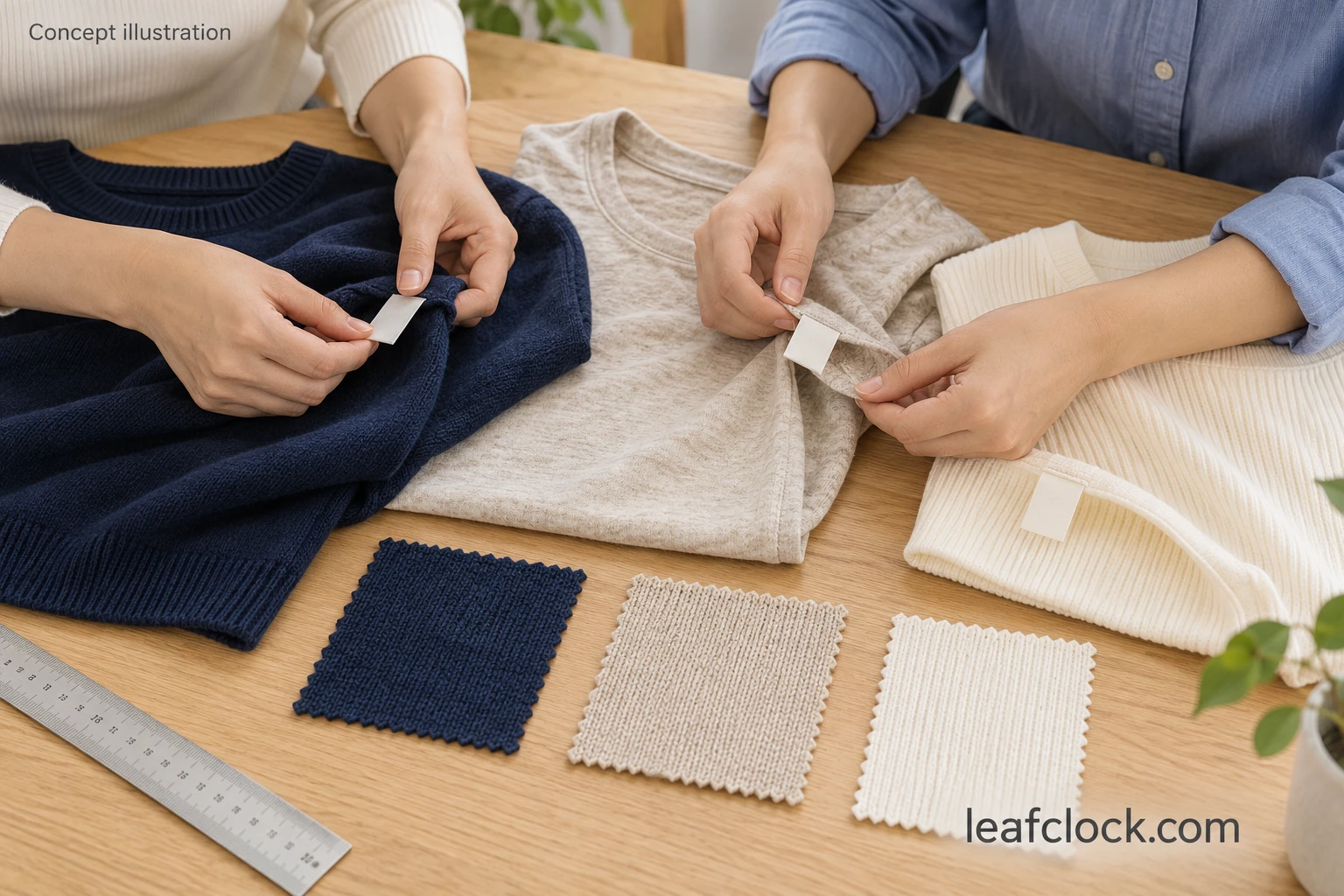
For other apparel groups, the case provides a concrete sampling question: check how the motif, color comparison and care information read together on ribbed fabric when the garment is relaxed and stretched. Leafclock configures the cue for the chosen fabric, approved artwork and wash-and-dry conditions rather than treating one historical image as a universal construction template.
Next step
Share your ribbed fabric, artwork, care-print layout and wash-and-dry routine to review the motif and color comparison on a finished garment in both relaxed and stretched states.