About the brand
YONEX is a global sports brand founded in Japan in 1946. Known for badminton and tennis equipment, the company also develops sportswear and accessories with a product philosophy centered on performance, materials and the demands of repeated play.
That context makes the featured towel application especially practical. A sports towel moves between the court, kit bag and laundry, so replacement guidance needs to work as a simple product feature rather than depend on packaging that is quickly discarded.
The application
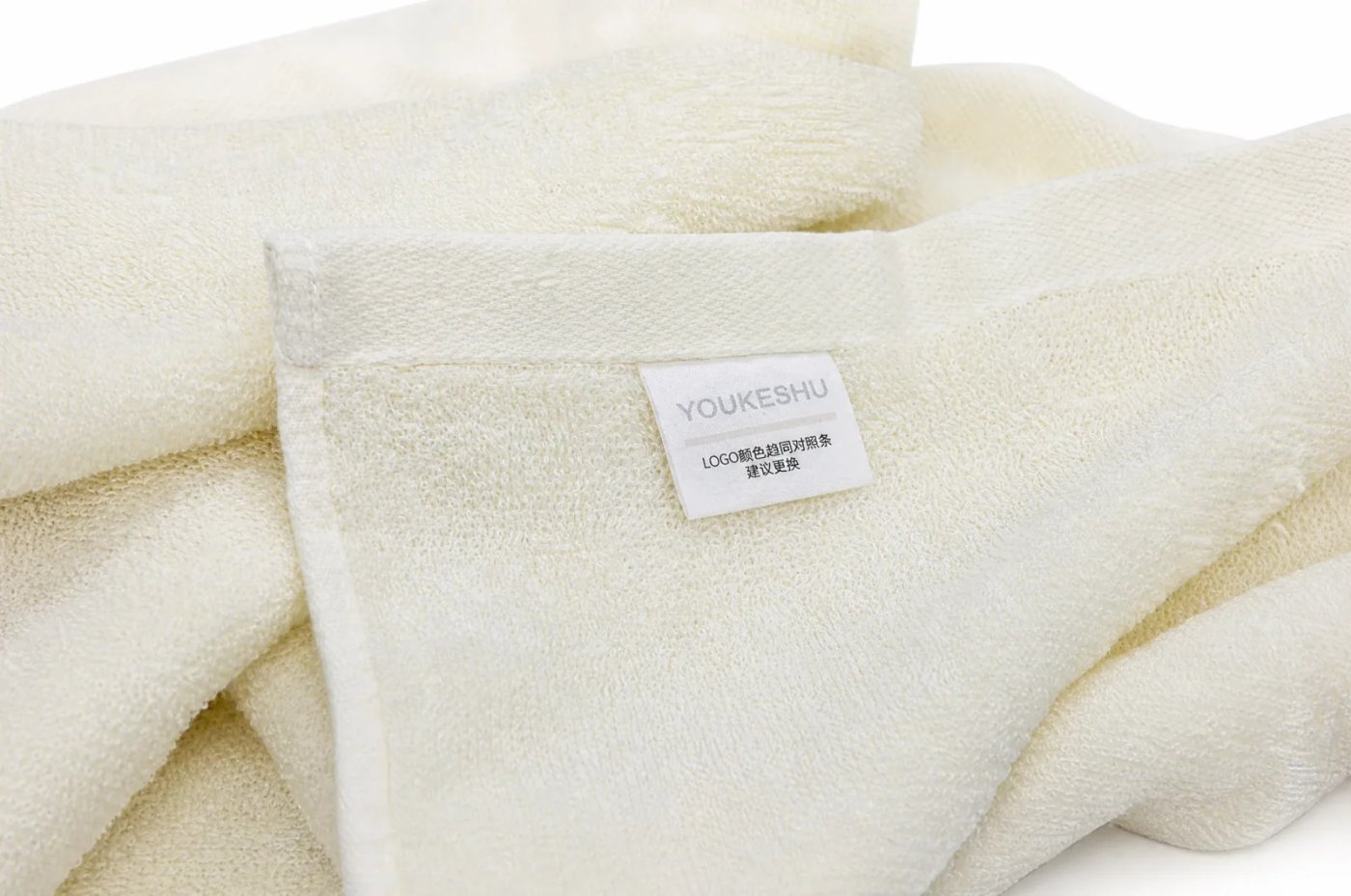
Leafclock and YONEX worked across performance apparel and sport-use textiles, including training apparel, socks and towels. The application shown here is a green sports towel. A white care label is sewn below the woven border, with two narrow bars beneath the laundry information. The printed instruction asks the owner to consider replacement when the colors of the bars become similar. A separate black tab carries the YONEX logo. The replacement comparison is on the white care label.
The featured towel brings three parts of the ownership experience together:
- The comparison stays together. The changing bar and its reference sit side by side, so the reading does not depend on a package or a separate color card.
- The cue shares a familiar care location. The owner finds the bars in the same place as the washing symbols, connecting replacement awareness with an existing laundry habit.
- The border provides a practical viewing point. The smooth white label stands apart from the towel's looped surface when the product is unfolded, hung or folded after use.
Ordinary fiber and care information remain part of the label system. The lifecycle label adds a replacement cue without electronics, an app or a separate record of washes. The wider sportswear cooperation does not imply that the same two-bar construction appears on every garment.
What this signals
YONEX's production application on this towel shows how a global sports brand can add visible lifecycle communication to a high-use accessory. The feature is integrated into the finished towel and explained with a direct comparison, making it useful beyond the first purchase moment.
For sportswear, apparel, towel and active-lifestyle brands, the broader lesson is that replacement guidance can use familiar brand components and existing care-label behavior. Leafclock configures the cue for the textile, artwork, label construction and actual wash-and-dry routine rather than treating every product as the same application.
Next step
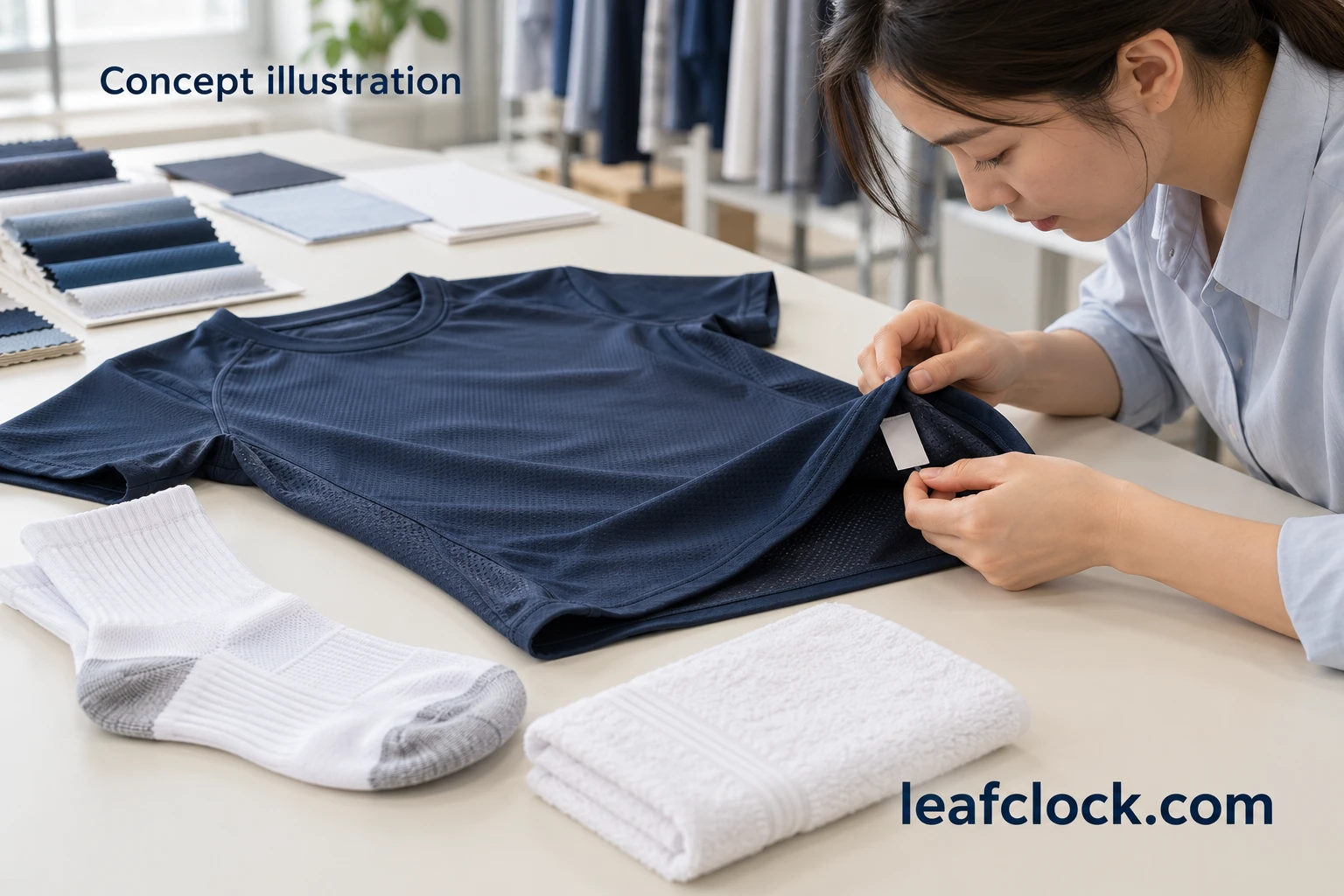
Share your towel border, label construction and care routine. Review whether the white label lies flat after sewing, resists twisting in handling and keeps both bars readable on the finished product.