About the brand
Mercury Home Textiles traces its origins to 1987 and has grown into a multi-brand home-textile company covering research, design, production and sales. Shanghai Mercury Home Textile listed on the Shanghai Stock Exchange in 2017, and its brand portfolio includes MERCURY, STARZ HOME, BLISS, SHUIXING KIDS and MERCURY BABY.
The company has made quilts and science-led sleep communication a central part of its brand strategy, including the establishment of its Shanghai Sleep Research Center. That makes Mercury a strong example of how a replacement cue can support an existing product promise: the feature is not separate from the sleep-textile story, but helps the owner understand the product throughout its period of use.
The application
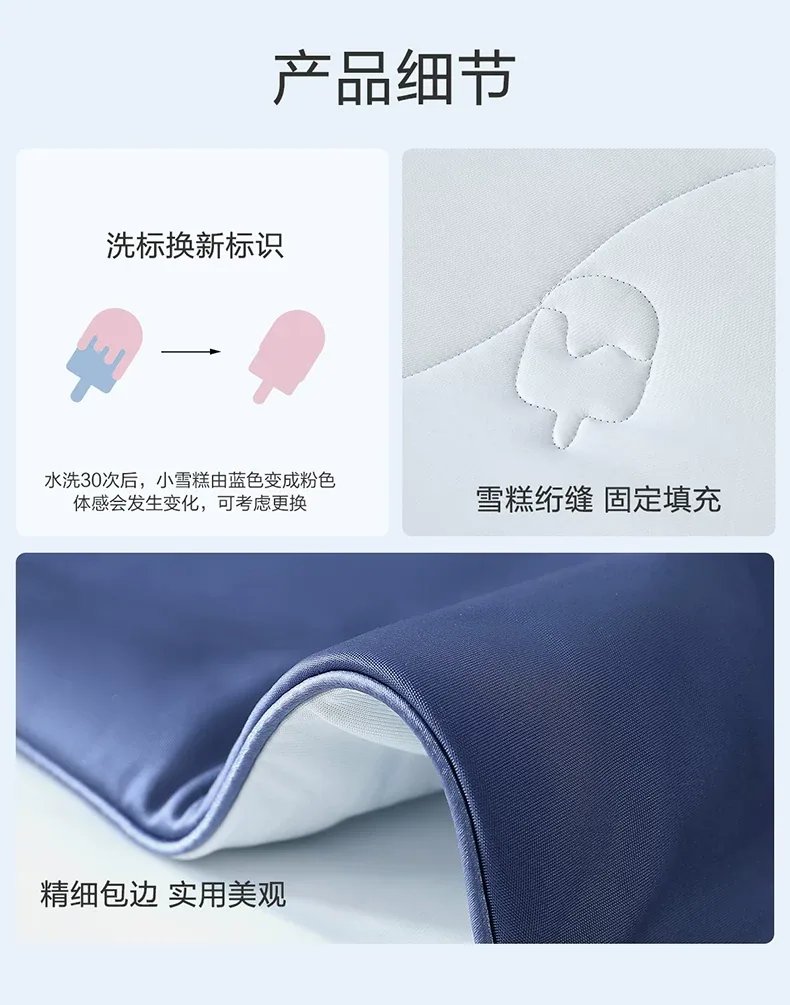
Mercury and Leafclock brought an ice-pop replacement cue into a quilt program that reached market use. The quilt listing describes the cue as a wash-label feature and supplies the color-change and replacement explanation.
The listing separates the feature from the quilt's construction story:
- The product page gives the wash-label cue its own panel. It illustrates the blue-to-pink change and explains when to consider replacement.
- An adjacent panel explains the quilting. The ice-pop quilting pattern and the way it holds the filling in place remain construction information, not evidence of the color comparison.
- The listing connects the explanation with the product. The ice-pop motif links its reading guidance with the on-product cue.
The same visual idea therefore works at two moments: the listing teaches the comparison before purchase, and the on-product cue keeps the reminder with the quilt during use. The replacement point remains specific to the pictured product and its care conditions rather than becoming a universal lifetime claim.
What this signals
This was an implemented home-textile program that moved into market use. It demonstrates the value of coordinating the physical label with product communication: the label carries the cue, while the product page teaches the customer how to recognize the two states and what to do next.
For bedding brands, this creates a practical point of differentiation without electronics, an app or a complicated ownership routine. Leafclock configures the cue for the textile, intended use and wash-and-dry conditions, while the brand can align the explanation across the approved label, care guide and product page. That turns replacement communication into part of the product experience rather than a forgotten line in the care instructions.
Next step
Share your quilt construction, label artwork, product-page assets and care routine to align the physical cue with a two-state explanation that matches the approved product evidence.