About the brand
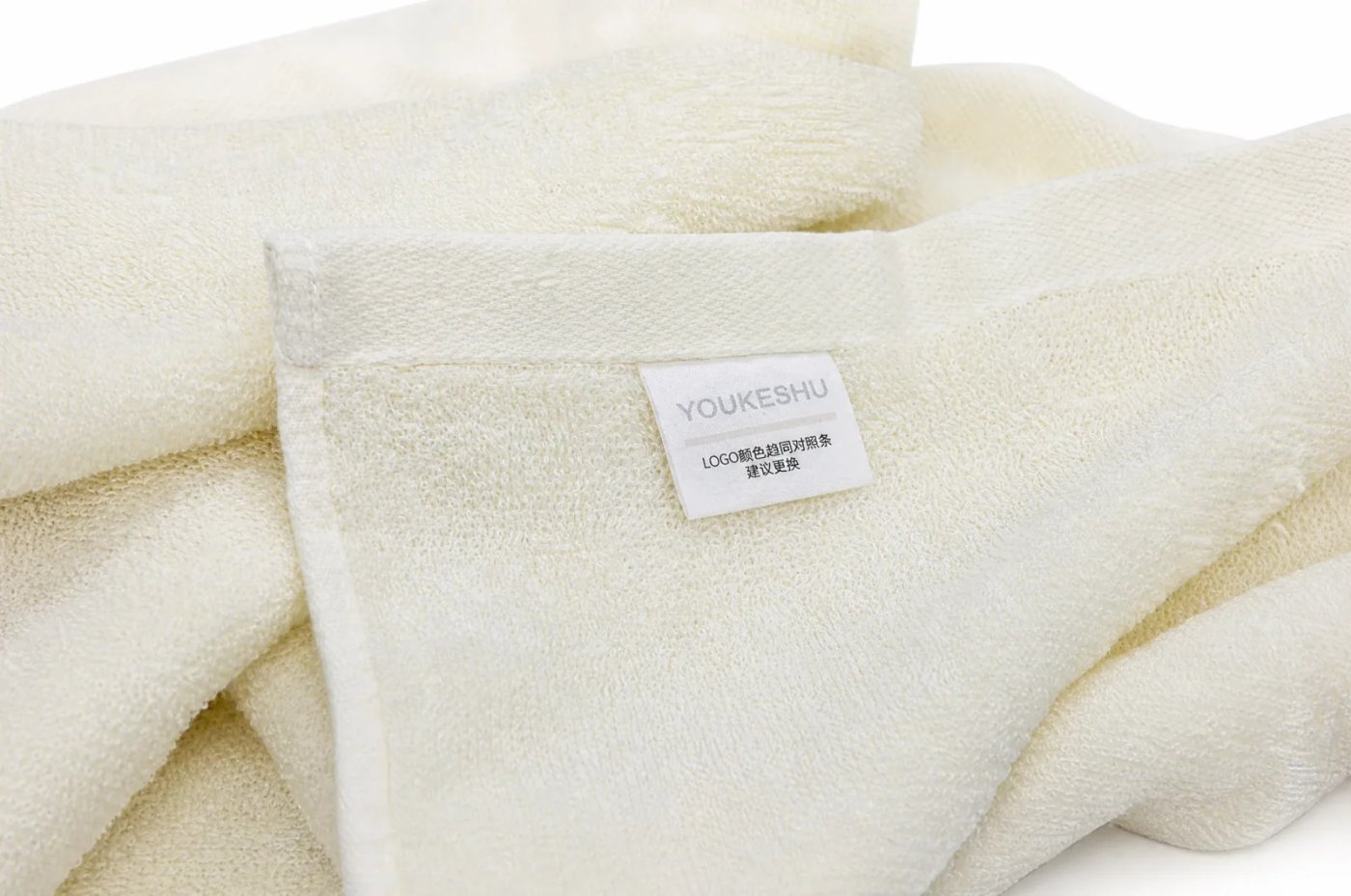
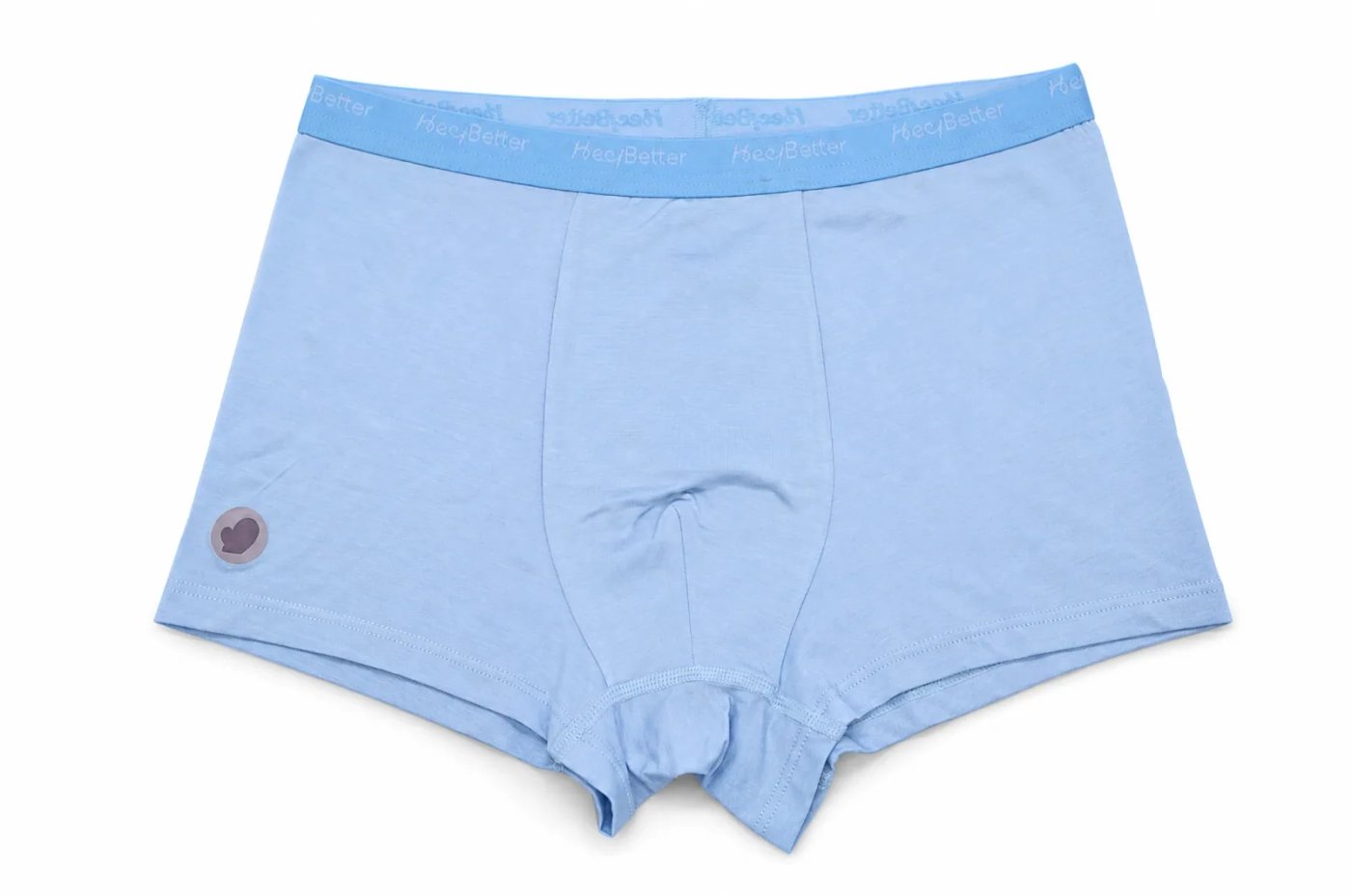
Purcotton is a cotton-focused consumer brand founded in 2009 as part of Winner Medical. Its range spans close-to-body cotton products, baby and childcare essentials, towels and home textiles, connecting material choices with everyday product design across multiple categories.
That makes Purcotton a relevant example of lifecycle communication on a real textile. For a brand built around cotton and daily use, a replacement cue is most useful when it feels like part of the garment's existing care language rather than a separate technology story.
The application
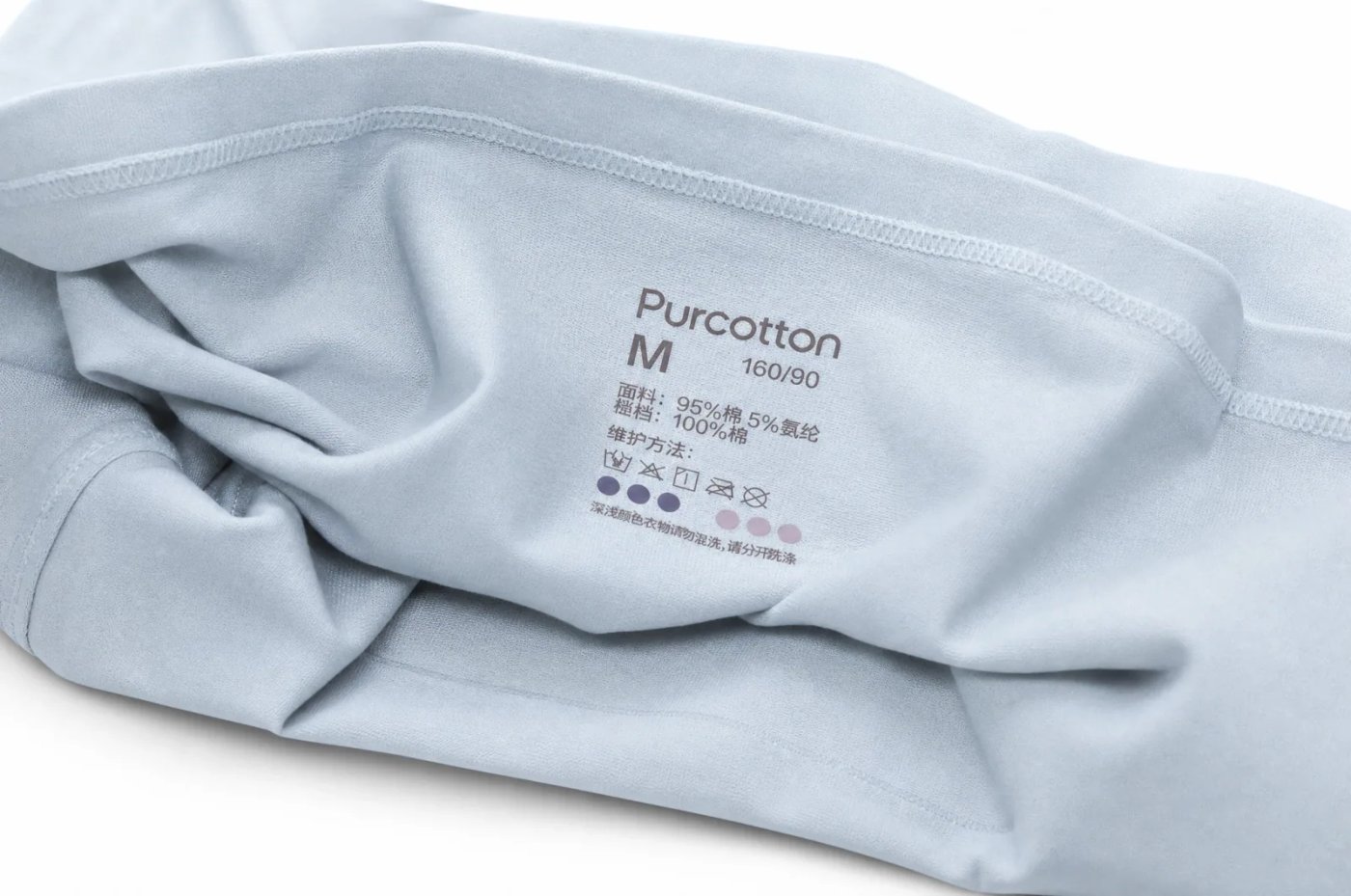
The wider Purcotton program covers close-to-body cotton products and home-textile applications including baby towels and bedding. The featured product example is a pair of high-waisted briefs. Inside the waistband, two groups of three dots sit below the laundry symbols, creating a compact comparison beside information the wearer already uses.
A separate product illustration, shown on a light colorway, explains the action: consider replacing the briefs when the darker changing dots approach the color of the pink reference dots. Three details make the application clear in everyday ownership:
- The comparison stays on the garment. Changing and reference dots sit together, so the wearer does not need the original package or a separate color card.
- The cue has a familiar location. Placing it beneath the laundry symbols connects replacement guidance with the moment when the garment is checked for care.
- The pack and illustration have different roles. The pack introduces the refresh reminder; the separate light-colorway product illustration teaches the dot comparison.
The blue-gray product photograph and the lighter instructional illustration serve different purposes: one shows the physical placement, the other explains the reading. Ordinary fiber and care information remain present; the lifecycle label adds a replacement layer without electronics, an app or a new tracking routine.
What this signals
Purcotton's production application shows how a recognizable cotton-products brand can turn a small printed comparison into an ongoing product feature. The cue works within the existing garment and care system, while the product illustration supplies the dot comparison and replacement instruction.
For other underwear, towel and cotton-textile brands, the lesson is not to copy the dots. It is to review how changing and reference areas read on each planned fabric color and how the replacement instruction stays distinct from ordinary laundry print. Leafclock adapts the configurable cue to the approved artwork, textile, construction and care routine.
Next step
Share your fabric colors, dot artwork, care-print layout and laundry routine to review both dot groups at finished size and keep the replacement instruction distinct from the care information.