About the brand
MiiOW is a Chinese intimate-apparel brand founded in 1998. Its long-running technology-underwear positioning spans bras, briefs, thermal underwear, homewear and socks, with product communication centered on skin-friendly comfort, function and everyday wearability.
That makes a visible lifecycle cue more than an isolated feature. It gives a technology-led underwear brand a function the customer can actually see and use after purchase, connecting product innovation with the ordinary routine of wearing, washing and replacing close-to-body garments.
The application
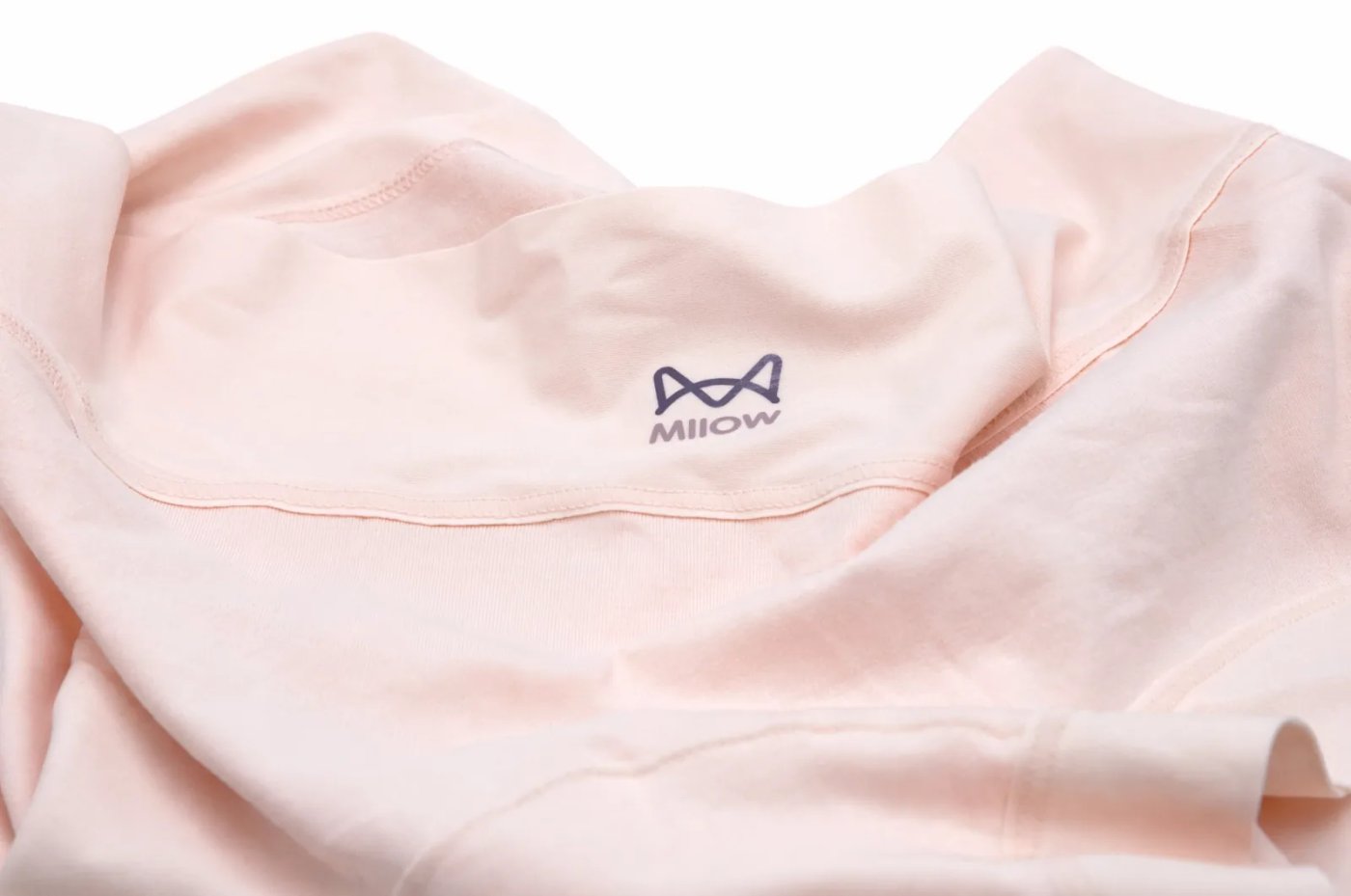
MiiOW and Leafclock brought lifecycle labels into production for underwear and bras. Separately, the M3 photographs in this case provide a placement reference: a compact cat graphic and wordmark sit on the wide front waistband panel, just above the horizontal seam, while the package repeats the same visual identity.
For a similar program, this location raises three practical sampling questions:
- Is the mark recognizable at finished size? Compare the package and garment graphics, then check whether the approved changing and reference areas remain distinguishable on the knit.
- How does the waistband behave? Review the print area while the elastic is relaxed, stretched and folded, rather than judging only a flat artwork file.
- Can the message stay compact? Keep the replacement instruction separate from routine care information without adding electronics or a separate device.
The M3 images do not establish that this cat graphic is the Leafclock indicator, which element changes color or what reference the wearer should use. Those details must come from approved product artwork and instructions rather than appearance alone. Regular care instructions continue to explain laundering; the lifecycle label provides a separate replacement action in the confirmed production program.
What this signals
The production program is the evidence of implementation; the M3 images serve the narrower role of showing a possible waistband placement. Keeping those two evidence roles separate makes the case more useful, not less: the brand-level cooperation is confirmed, while no unapproved color-change rule is attributed to the pictured graphic.
For other intimate-apparel brands, the practical lesson is to evaluate artwork distortion, reference contrast and instruction placement on the finished elastic construction. Leafclock adapts the signal, artwork and carrier to each approved product and care routine so the final reading comes from the product specification, not from a visual guess.
Next step
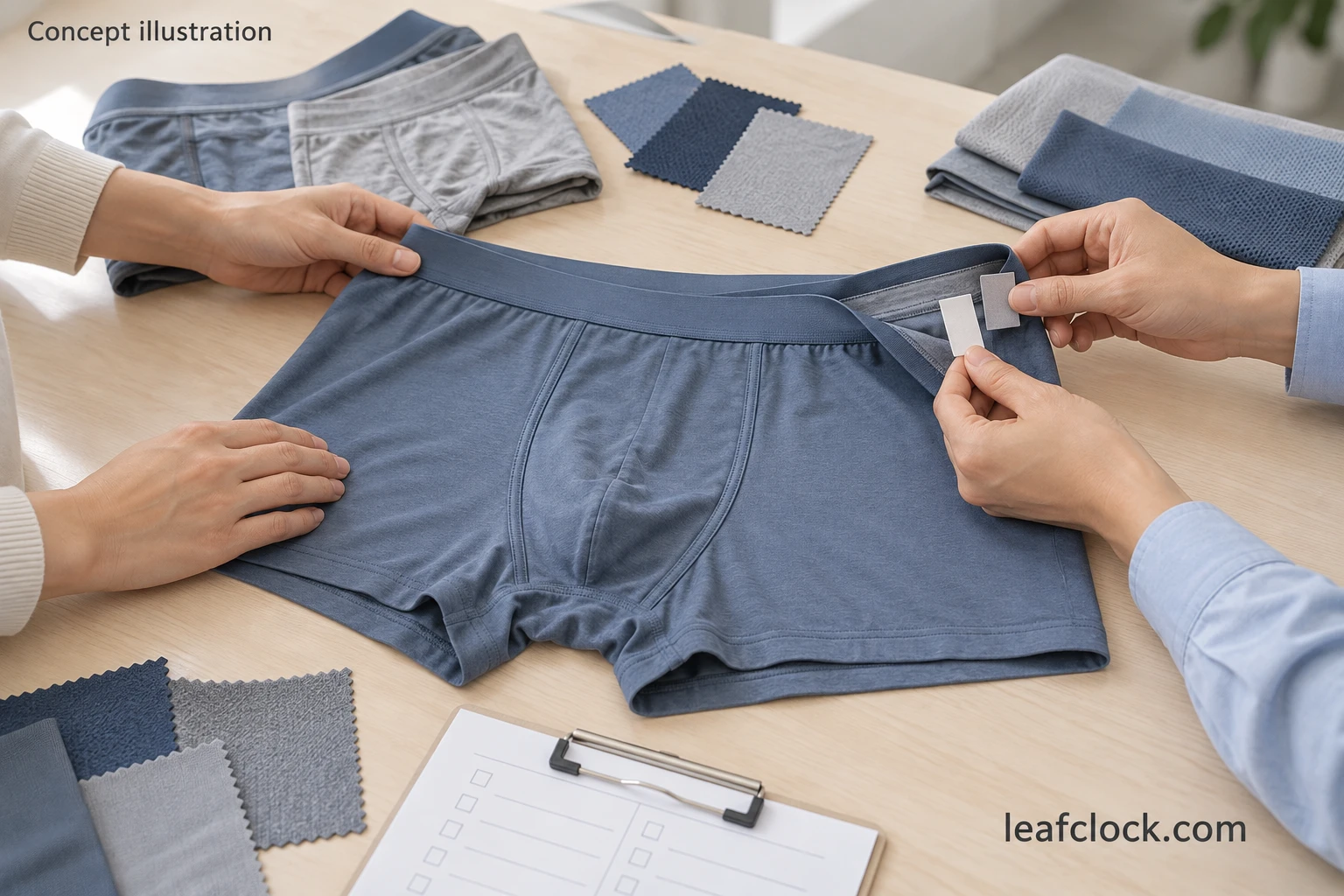
Share your approved artwork, waistband construction and care routine to review print distortion, reference contrast and replacement wording on the assembled garment.