About the brand
JNBY is the flagship brand of JNBY Design, a designer-fashion group founded in Hangzhou in 1994 and listed on the Hong Kong Stock Exchange in 2016. The group's portfolio spans women's, men's and children's apparel, footwear, accessories and home products through brands including JNBY, CROQUIS, jnby by JNBY, LESS and JNBYHOME.
JNBY's design-led identity gives the Leafclock application a distinct role. For a brand built around a recognizable visual language, a lifecycle cue has to earn its place as a product detail rather than read as an unrelated technical device.
The application
JNBY and Leafclock brought a visible replacement cue into frequently worn, design-led apparel in a production application. The case is presented at category level rather than tied to one garment's artwork or placement, so the useful design questions can be stated without inventing a missing style detail.
When evaluating a similar line, three checks connect the confirmed application with a finished-product decision:
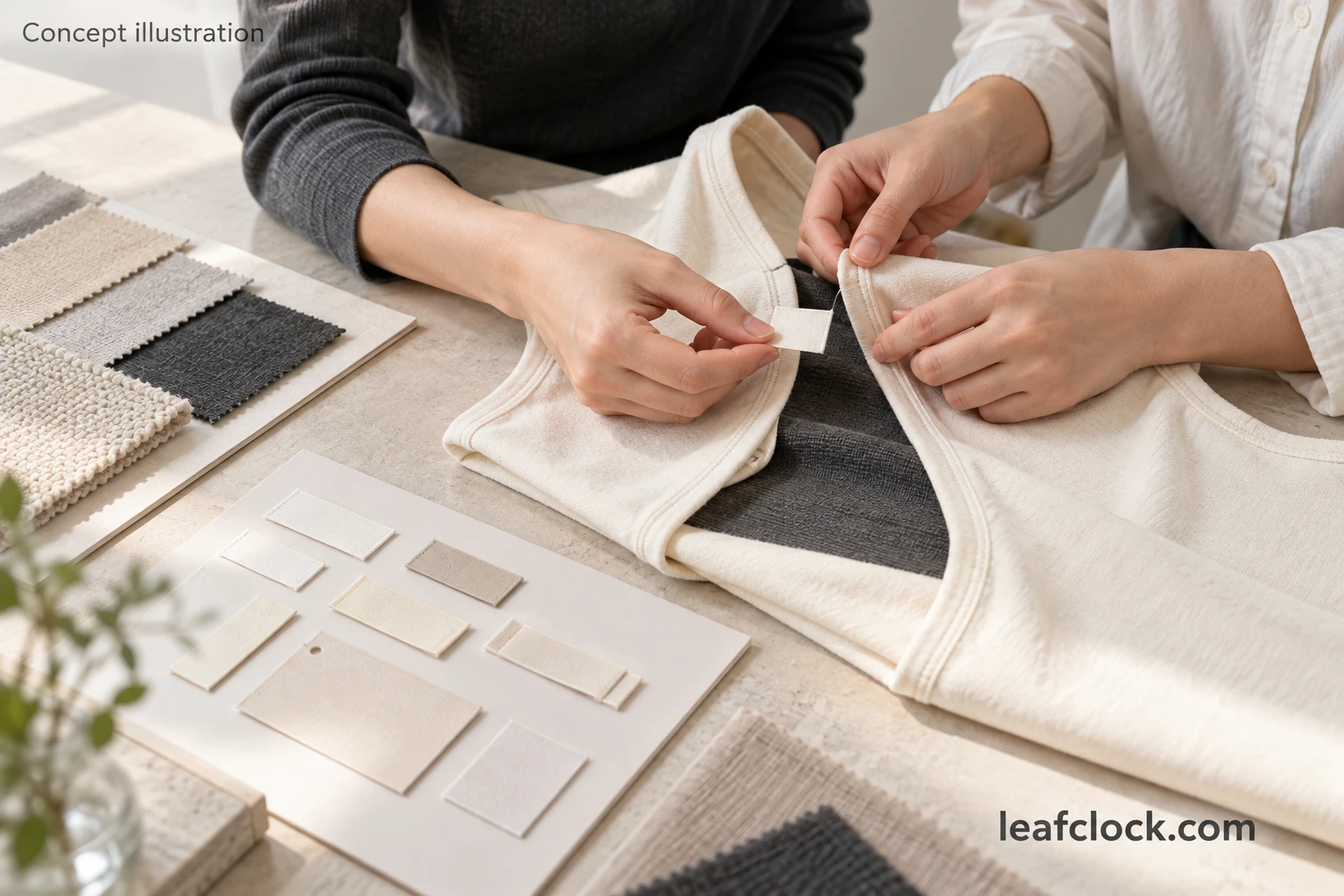
- Check the garment open and folded. Review whether the owner can find the cue in the garment's usual folded, hanging or open position, rather than judging only a flat artwork file.
- Keep care and replacement distinct. Ordinary laundry instructions explain how to treat the garment; the replacement message should read as a separate action rather than disappear into a block of care symbols.
- Judge scale within the design system. Compare artwork, carrier and placement against the fabric, seams and surrounding brand information on the assembled sample.
This approach adds function without electronics, an app or a separate tracking routine. The specific carrier and position remain decisions for the approved product sample, not details to infer from the category-level case record.
What this signals
JNBY's production program shows that lifecycle communication can belong in design-led apparel. A replacement cue does not have to be visually loud to be useful; it can be developed as a controlled product detail that extends the brand story into everyday use.
For other clothing brands, the case demonstrates a route from design intent to real application. Leafclock configures the signal around the garment, care routine and intended replacement point. The next design review should test discoverability on the actual garment and separation from laundry information, rather than rely on a generic promise of consistency.
Next step
Share your garment, fabric, construction and information layout to review the cue in its usual folded and open positions and verify that the replacement message reads separately from care instructions.