About the brand
Babycare is a designer-founded mother-and-baby brand with a range spanning baby products, textiles and everyday family essentials. Its public product philosophy brings together design, materials and the experience of parents and children in daily routines.
That makes this application more than a technical label story. On a baby textile, a useful feature must be easy for a caregiver to understand while remaining consistent with a soft, friendly product language. The replacement cue becomes part of that experience rather than an instruction reserved for the original package.
The application
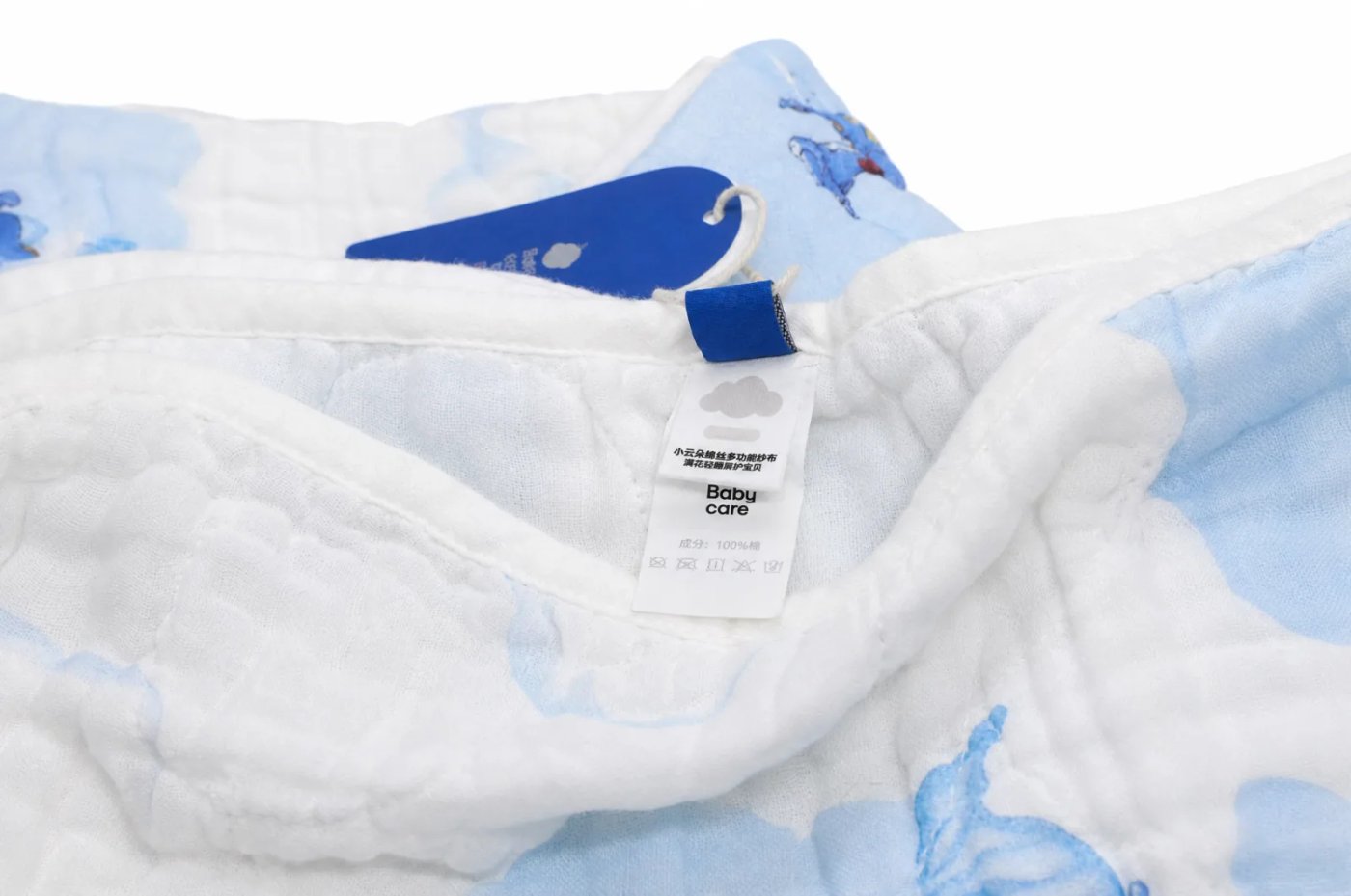
The featured Babycare product is a baby gauze towel with a rectangular white tab sewn at its bound edge. A small cloud graphic sits above a short comparison bar. The product guide shows the cloud moving toward pale pink and explains that this is the point to consider replacing the towel.
The product system separates each communication job clearly:
- The cloud makes the cue recognizable. A familiar, friendly shape gives caregivers one specific graphic to find when folding or laundering the towel.
- The comparison stays beside the changing area. The short bar provides a reference on the same white tab, without requiring the original package or a separate card.
- The supporting components retain their own roles. A second white label carries the cotton content and laundry symbols, while the larger blue hangtag introduces the product at purchase.
The white tab also gives the color comparison its own background, distinct from the blue print on the gauze. Ordinary care instructions remain available beside the lifecycle label, and the replacement cue requires no electronics, app or separate wash log.
What this signals
Babycare's production application shows how an established baby-products brand can translate replacement communication into a visual language suited to its category. The cloud, reference bar, care label and hangtag each have a distinct role, keeping the comparison on the textile rather than depending on disposable packaging.
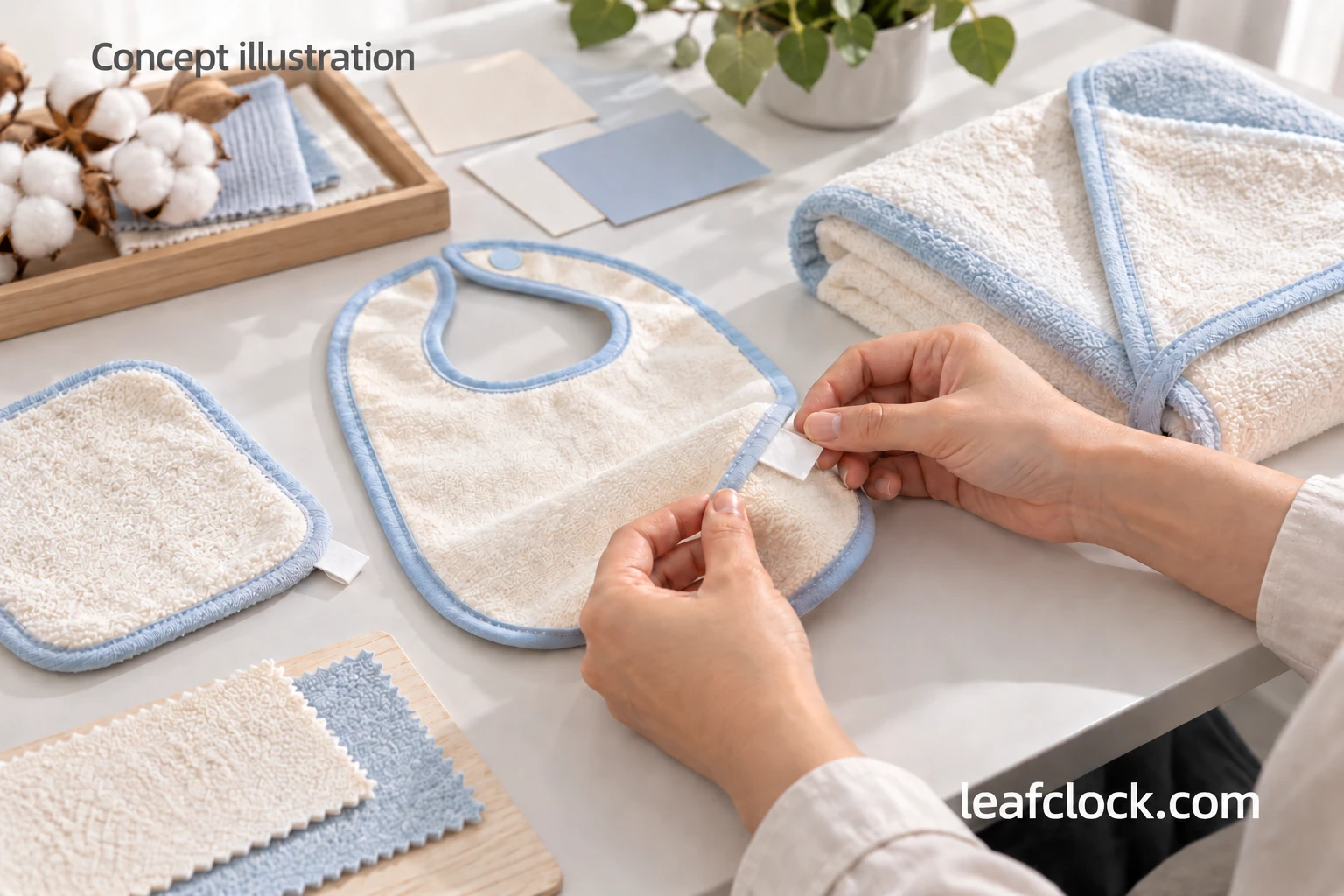
For other baby-textile and family-product brands, the case demonstrates a practical route from a friendly motif to a real product feature. Leafclock adapts the lifecycle cue to the brand's artwork, textile, binding, label construction and care routine. On a similar product, the two sewn labels should remain distinguishable when folded, and the pale reference should be checked against the actual white label stock.
Next step
Share your gauze, binding, care-label layout and hangtag artwork to review the three components together, including their visibility and contrast on the folded towel.